Saturday, September 1, 2018

Patients at Medical Conferences - The CMA Health Summit


It’s been a week and a half since the Canadian Medical Association inaugural Health Care Summit concluded in Winnipeg.  

A conference that I was able to attend.  Being local does have its privileges.

A unique feature of this Health Care Summit was that a group of patients were invited to attend and participate in the conference.  I was one of 27 patients who attended the conference as a patient/caregiver advocate (I am not a patient).  The CMA actively sought out patient reps from across the country to attend. 

Our plucky group of patients was joined by over 700 members of the CMA.  So this is one of the larger medical conferences that I have attended.

My first comment about the event was that the organizers did a good job of orienting the patient reps.  We received an orientation package a week before the event and we were all able to participate in a conference call where we could ask some questions and get some basic information on the event.  We also had a breakfast that was planned on the first day where the patient reps could all meet each other and connect.  This preparation that the organizers undertook was well received and I think we all appreciated the effort of making patients feel welcome.  


In addition to the organizers doing a commendable job of including patients in the preparations to the conference, I certainly felt a welcoming presence from many of the other attendees.  If the purpose of the Health Care Summit was to open up the proceedings to a wider audience than just CMA members, I think they did a good job.  I think anyone who is interested in Health Care and Health Care Policy would benefit from attending an event like this.

What’s In It for Patients?

One thing that I felt missing from the event was a specific purpose of having patients present.  I may have a jaded perspective, but whenever patients are invited to these events I skeptically ask “why?”  Is this just good public relations for the CMA?  Is there a specific deliverable in inviting patients?

For me, I was able to connect with many people who I know on social media who are involved in many facets of health care.  I took a lot of notes about some of the higher level policy issues that were discussed.  I certainly learned a lot.  I am speaking at a conference in late September so I was able to pick up some good talking points. 

Yes, I certainly learned lots and made some good connections but I still struggle whether it was worth it.  I have to book time off work and sacrifice a significant amount of personal time to attend these conferences.  I would consider it well worth it if I knew it was making a difference but many times I wonder if it is.

A Patient Perspective

A comment heard at the conference more than once was “Why is a patient not on a panel discussion?”  Good question.  Specifically when the subject matter is patient centric.  I think everyone realized this was a missed opportunity.

I think it would have certainly added to the discussion to have a patient be able to participate in some of the discussion and be able to take questions from the audience and participate in an expanded role.  

However, there is one small issue with this.

If I were to be invited to participate in a panel discussion, I would have one significant barrier.  I represent “A” patient perspective and not “The” patient perspective.  If you bring one patient rep onto the stage they can only represent their perspective and not of patients as a whole.  I try very hard to make that distinction.  That does not mean that patients can’t provide a lot of meaningful input but the audience has to realize that patient perspective is diverse and not in any way homogeneous.  There is not a patient lead organization in Canada that is specifically tasked with developing position statements based solely on the views of patients.  I know some organizations who are starting up but they are still in their infancy.  The vast majority of patient advisory councils or other patient committees exist at the whim of a larger organization that have other priorities, not just patient engagement.  I think that some organization that represents patients and ONLY patients is needed.  A united patient voice could provide a powerful message. 

I think the CMA did a great job of selecting patient reps who did represent several perspectives.  I think they also selected a group who are not shy about asking questions and participating even though they are drastically outnumbered.  This does not surprise me as many of these people have been die hard advocates for many years and they are used to being outnumbered and having to be a little more aggressive when they want their opinion heard.  


I think everyone at the conference was well aware of the group of patients in attendance.  Kudos to all of you (patient reps) who attended and participated so effectively.  You folks are awesome.


Lesson Learned

So if I had one take away from this event what would it be?  

This event was well produced and choreographed.  Lots of bells and whistles but one thought kept rolling around in the back of my mind.  A truth that I believed to be true before I attended this event.

Patient engagement is not about attending a fancy medical conference or being part of a patient advisory council.  Engagement is about meeting patients where they are.  In a Doctor’s office.  In a clinic, or in a hospital.  It starts out with “Hi, how are you?” …”What brings you in today?” It is about a relationship and developing trust between patient and physician.  It is the simple courtesies that we were all supposed to learn as children but seemed to have forgotten as adults.  It is about treating a patient where they are and it takes place all over this country.  From the largest hospitals of the UHN network to a family physician’s office in Williams Lake BC. 

When a patient comes in to see you, they are already engaged.  The question is are you?

That's patient engagement.


Saturday, July 21, 2018

The Power of Story


I’m done my manuscript! 

I’m sure in the next few months I’ll say that several times. As I do several edits.  What I have completed is a second draft.  I’ve moved the pieces around the chess board and I think I have things where I want them.  Until my editor tells me different.

Some may wonder.  Aren’t you getting tired of this?  It has been nearly 10 years since our son with Congenital Heart Disease was born.  We have been at this a long time.  That is true…but there are some things that I have never talked about…and some things I never will.  There are many questions that people have asked me that I have never been able to give a cohesive response to. This was something I wanted to do for a very long time and I’ve finally done it.  It’s on paper.  No one can take or edit that away.  Will it get published?  Who knows…and I don’t care.  What I set out to do. Is done.

I started this project in mid-January.  With some strong encouragement from Susan I joined a group of people who were taking a class on writing their life story.  The purpose of the class was for each of us (by the end) to have a manuscript or at least a rough first draft.  I had no idea what I had signed up for.

I met a group of people.  Most were significantly older than I.  All of whom had a story to tell.  As one who has been actively involved in the health care system and who has participated in many sessions involving patient stories, I have heard many stories.  Patient Stories.  In this class we were able to explore much more than one kind of story.  The sky was the limit.  The story of Youth.  Romance.  Stories of Financial Success.  Tremendous Tragedy.  It was a great experience to hear so many different experiences and how to capture those stories on the written page.  It drastically changed the way I have approached my writing.  I actually call myself a writer now.

I wrote many pages that I know will never see the light of day.  As part of the class we had several assignments that challenged many of my assumptions.  I have always had a fairly clear vision of what I wanted to write but this forced me out of that box.  It forced me to ask.  Who I was, and where did I come from?  I also found out that I have a distinctive writing style. As I wrote about the storm clouds in our lives I described a scene from my past.  The many prairie thunder storms that I had known all my life.  I found how we can’t escape the environment in which we grow up.  Growing up on a farm on the Canadian Prairies is something I had never written about before.  It was fun to explore some of these parts of my past.  Some things I had never thought much about.  It was a really unique experience and as all of my fellow writers from my class can attest.  It's a lot cheaper than therapy.

Photo Courtesy Mark Duffy - FineArtAmerica.com

So…where to from here? 

I have been fortunate enough to find an Editor.  We are also at the very early stages of the editing process.  We are taking it easy during the summer and will likely put in a greater effort in the fall.  So I’m not actively working on the book right now.  I’m letting it sit and percolate.  I did however let Susan read it.  She never read a word of Draft Number 1.  She finished the last chapter yesterday.  There is nothing more nerve wracking than let your spouse give you feedback on your writing.  Your “baby.”  With a great deal of fear and in trepidation I have been listening to some of her feedback.  So far it has been a positive review.  The one thing her review has confirmed to me is how hard it has been to relive some of our more difficult moments.  She refused to read one Chapter.  She read the first few lines (knowing what was coming) and skipped that chapter.  It’s difficult.  Even years later.

Now I am in the process of working on my strategy to getting published.  I could easily self-publish.  However, I have been encouraged not to.  So now I have entered the murky world of literary agents and publishing.  This should be interesting. 

I have always been a strong believer in the importance of sharing patient stories.  In many ways I think stories put health care in perspective.  Now I have learned the broader importance of stories not only in the health care context.  Everyone has a story.  Every story is extremely valuable.  This has been a great lesson to learn.


Saturday, June 9, 2018

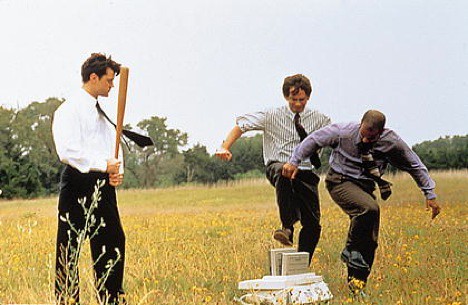
#AxetheFax*


I’m on a mission!

Whenever I get an opportunity to take a shot at the health care system for their use of fax machines I make sure to climb upon my soapbox and share my utter disdain for the use of this device that should have been purged in the 1990’s


In my office, we have one of these fancy pants network printing workstations.  The thing probably costs a fortune.  It does colour…it scans…it also faxes.  In the past 10 years I believe I have used the fax function a total of three times.  Who did I fax?  A government office, an insurance company, and of course a Doctor’s office.  Both the government office and the insurance office that I faxed, are now using email.

How has my new mission to purge health care of fax machines gone?  Not well.  I have discovered that health care loves their fax machines.  They actually get quite defensive when you cast aspersions on their archaic devices.

On a recent visit to our pediatrician even my wife got in on my fax shaming mission, when our pediatrician, asked us to fax her an insurance form.  My wife literally laughed at the prospect.  This laughter was met with a 10 minute diatribe on how our Doctor couldn’t function without her beloved fax machine.  In fact, she now has software that takes incoming faxes and her office admin can take an electronic version of the fax (called a scan in the rest of the world) and can automatically file it electronically in our chart.  It doesn’t even need to be printed.

When my wife explained to me how this worked; I was flabbergasted.  Exactly how is that different from an email?  The health care system has actually developed software that facilitates and expands the use of fax machines.  Unbelievable.  

As an avid health care conspiracy theorist I hypothesize that the use of fax machines is an intentional way of keeping patients at arm’s length and away from their data.  What patient has a fax machine at home?  No one.  If we do have a fax machine  (at home)we probably should be getting counselling for being a hoarder.  By using a fax machine it makes it impossible to send documents to patients because they don’t have fax machines.  Conveniently most health care organizations have privacy policies that forbid the email of patient information via email due to privacy concerns.  Within our Health Region, by policy, if patient information is transferred via email it must be encrypted.  Who is going to do that?  This makes it very easy for health care organizations to make policy that disallows any transfer of information via email.  It's easier for them but not for you!  Just another example of provider-centric policy.

The fax saga gets worse.  I read an interesting report a few years ago.  Our quality team at one of the hospitals, where I sit on a Quality committee, did a study of how many faxes were being sent unnecessarily within the hospital.  As an example, when a patient is admitted to the hospital it starts a chain of events that are driven by policy and process.  These processes include sending documentation to various recipients by fax.  This is done automatically and without thought.  One document may be faxed to 5 different offices by policy.  What the study attempted to do was determine how many of these documents were sent and never looked at.  They were picked up from the fax machine, put in someone’s “Inbox."  A week later, when the “Inbox” was full the recipient may glance through the stack of faxes and throw the majority of them in the trash.  The fax equivalent of Spam.  The study found hundreds of documents were being sent weekly without any reason or purpose.  They were simply being put in the trash.  How is this the safe handling of patient data?

For those who think I am making far too big a deal out of this I have a few comments.  For me the fax machine is symbolic of a lot of problems in health care.  Fax machines are archaic and outdated.  The problem with getting rid of them is that it would create a storm of change in the basic operations of health care.  Policies would have to change and equipment would have to be upgraded.  Herein lies the problem.  Most administrators would rather develop band aid solutions to using a fax machine rather than go through the pure torture of drafting new policies on how to safely transmit data via modern means.  Policies that might take years to develop.  Administrators have nightmares about this kind of change as it is arduous and painful.

With change being this difficult within the health care environment one has to question how difficult it is to make other changes that effect clinical practice.  That is also depressing.  I have read that in some instances it can take up to 17 years for proven research to be fully implemented in the clinical environment.  17 YEARS!  That is an abysmal number.

The fax machine causes problems in health care!  It is a barrier for patients to access information.  It is not secure.  It is also a symbol of how difficult it is to change anything in health care.  Something we need to get much better at, if we are to change health care for the better.


Yes…I’m coming for your Fax Machine!


*Credit to Isabel Jordan @seastarbatita who posted the first #AxetheFax hashtag I came across, to which I have un-apologetically ripped off.


Wednesday, April 11, 2018

Go Jets Go

For the next few weeks there will be a recurring theme and topic of discussion in the City of Winnipeg.  Even conversations about weather and bad roads will be eclipsed by one pervasive topic.  Hockey! Playoff Hockey!

I have not always been a Jets fan.  I had only a casual interest in hockey as I watched the die hard Jets fans suffer through the earlier version; Jets 1.0.  A team that would bring so many conversations that involve "woulda"..."coulda"..."shoulda".  A team that showed a few flashes of promise only to have their expectations crushed.

The 2017/18 season has been a lot of fun.  This team has talent and it shows.  At times they are not just good; but really good.  Winnipeggers deserve this.  Whatever happens in the next few weeks I hope Winnipeggers, and Manitobans enjoy this.  This is fun and its a welcome distraction from the challenges and pitfalls of every day life.

In early December I traveled to Ottawa, for work.  I walked into one of our corporate boardrooms and deviously asked if anyone had heard the score of the hockey game last night.  All I heard was moans and groans as our Jets had crushed the Ottawa Senators the night before.  That was worth the price of a flight to Ottawa.  Yes, being a Jets fan has now become a lot of fun.

I'm proud of the work that the Jets do in the community to provide many people with a much needed boost.  In fact most NHL teams are very good at supporting their communities.  I enjoy seeing the Jets players go to schools, hospitals and help out in the community.  It means a lot to us.

We have a bit of a joke in our house.  In spite of our time in Edmonton we would never be Oiler fans.  It was just never meant to be.  When we were in hospital in Edmonton, with Russell, members of the Edmonton Oilers and the Edmonton Eskimos would routinely stop by the hospital and greet the kids.  In 6 months and several visits Russell never met one of these players.  We were always busy with a procedure or some test going that meant we were absent when the players would stop by. 

Regardless of our scheduling conflicts we appreciated the attempts these players made to brighten the day of patients.  It's been encouraging to see the Winnipeg Jets players continue this practice of supporting the community.  It means a lot to everyone.  I think everyone deserves a distraction as we all go through some very challenging times.  Sports provides us an outlet where people who have very little in common can come together to support our team.  I don't think we have seen any better example of this than the outpouring of support that we have seen, this past week, for the Humboldt Broncos.  The amount of support for the team and their families has been awe inspiring.

So for the next few days and hopefully weeks we can set aside our differences and be distracted for a while.  A very welcome change for a community that really deserves it.

Will the Jets make a deep run into the playoffs?  Will they crash and burn in the first round?
Who knows.  This is sports and anyone who is a sports fan knows you should expect the unexpected.

No matter how this season ends...this has been a lot of fun.  Buckle up and enjoy the ride.

Saturday, March 24, 2018

The Awkward Silence

We’ve all been there.  

Uncomfortable situations where you aren’t really sure what to say next.  They happen all the time.  Something is said or done that makes you pause for a moment and say to yourself “what do they mean by that?”  or “who do you think you are?”

For the past few years, as we have gotten to know our medical providers.  We’ve had that awkwardness surface a few times.  Relationships are changing in health care.  I think that is a good thing.  However, as we redefine the relationships with our health providers we enter uncharted territory.  What’s appropriate? How much of ourselves do we emotionally invest in these relationships?  How much is too much?  Let me explain.

As a patient you are frequently being put in vulnerable positions.  Emotionally and physically.  Our personal space is invaded by poking and probing, often in areas we consider “private.”  Medically necessary? Yes.  Awkward and uncomfortable?  Definitely.  However, this isn’t new.

What is new and even more complex to deal with is the emotional and social side of the patient-provider relationship.  Over the years we have become very attached to our care team.  It is much more than a sterile professional relationship.  We have opened up to each other and shared ourselves.  This has been a two way street.  I have met some of our Doctors spouses and children.  They have shared their own stories of the challenges of being a parent.  We’ve also shared many laughs.  This has made a huge difference to us as we have grown to appreciate these people for the people they are and not just a title or position.  However, there are limitations to this relationship.  There must be some professional boundary; but where is that boundary?  What is appropriate?  The truth is that these can be high risk relationships.

Several years ago I was exchanging emails with another parent of a heart kid, as it turned out another transplant kid.  We had been introduced to each other by one of our Doctors.  It was this Physician’s informal version of peer support.  Over the next few months this Dad and my paths would cross related to some issues going on in the hospital.  We would communicate semi frequently, via email, as their daughter encountered some significant challenges.  It was difficult to read his string of emails as their health care journey progressed.  His daughter was admitted to hospital and steadily declined.  Many of the Doctors and Nurses that he knew, I knew as well.  We would talk about them by their first name.  We had a relationship with them.  They were a part of our family.

Then eventually the email came that I was dreading.  His daughter had passed in the ICU in Edmonton.  It was gut wrenching to read as the feeling of helplessness and grief consumes you.  A few weeks passed and we once again exchanged emails.  I recall an email he sent to me that described how alone and abandoned he felt.  When his family was in hospital they had support.  They had a team who was coaching and encouraging them.  They had a bond, in his daughter, who they were ALL caring for so diligently.  They were unified in their purpose.  When his daughter passed there was no reason to go to the hospital anymore.  His team was gone.  He told me in his email that he felt like he wasn’t part of the club anymore.  He even stated that it extended beyond the medical team.  He had been active as a parent volunteer and was involved in hospital activities.  Now, that too felt like it was gone.  It was tough to read but I understood exactly what he was talking about.
 
I too have felt this awkward distance from our health providers.  When Susan and I celebrated our 25th wedding anniversary, last fall, we spent considerable effort in determining the guest list.  It became very apparent to that there was a gaping hole in that list.  There were 5 or 6 names that could have been added to that guest list, that were absent.  A few key members of our medical team who have spent the better part of the last 10 years with is through some of our most tumultuous moments.  It was also striking to think how integrated these people have become in our lives.  They really have become friends and family to us but yet there is that illusive “barrier” that exists.  That professional distance that must remain in place.

I raise this issue for two reasons. 

One, I think the closeness and camaraderie we feel with the people who look after our medical needs is phenomenal and has benefitted us immensely.  I would never discourage that relationship, provided that it is a healthy relationship.  Which brings me to my second point.

For this to be a healthy relationship there does need to be boundaries.  For there to be boundaries these issues need to be discussed.  This should all be part of the education that patients receive as they journey through the health care system.  Yes, we should learn about the technicalities of our illnesses, the medications, and the treatments…but there is a social and emotional component that is also extremely important.  You need to have a life.  A life outside of the hospital.  You can’t cut yourself off from your community.  Your supports.  Your family and friends who may have a difficult time relating to what you are going through and may not understand the biological/medical nuances of your experience.  This is a far more difficult balancing act than it may seem.  The bottom line is that we all hope to put our illnesses behind us, and once we do and re-enter normal society we have to be prepared for that as well. 

A difficult transition for many.


Saturday, February 24, 2018

All Quiet on the Blog Front


I thought I should take a few moments and explain why my blog has been so quiet as of late.

Blogs are great tools for sharing brief stories or random opinions.  Short, sweet, and to the point.  I have enjoyed writing my blog posts and I hope some of you enjoy reading them.  I am always open to questions and comments as long as they are constructive.

So why I have not been posting on my blog as of late?

I have embarked on a book project.  This is something I've thought about for some time and finally I have decided it's time to do it.  This was my New Year's resolution this year.

I had several ideas and concepts for the book that I wanted to explore.  The one apprehension I had having never done this before was to get a little guidance on how to approach a fairly monumental project.  The answer to that question came early in January when Susan brought to my attention a course that was being offered, in my community, about how to write your life story.  Knowing that my book would be autobiographical in nature it was a great opportunity.

I started my first class in mid January and I'm now seven weeks in.  Wow, has this been a journey.  The class is being facilitated by Wilma Derksen.  A person very well known to the Winnipeg Community.  Co-facilitating the classes is Martha Stewart (no not that Martha Stewart) who shares fascinating stories of her life growing up as a missionary kid and travelling all over the world.  The real stars of the class are the participants who have shared so much of themselves.  Truly an amazing group who I am learning so much from.

The weekly classes are just the ticket I needed to be accountable for keeping up with my writing project.  As of today I have just eclipsed the 30,000 word mark and I'm just getting warmed up.  Pretty good for just a bit over a month.  I predict that my project will hit the 80K to 100K mark before I am done so I haven't quite got to the half way mark.  I still have a long way to go but I'm enjoying  the process and I don't think my progress to date has been a small achievement.

The best part about "Write Club" is the sharing and interaction that occurs.  The stories and experiences the group shares are quite amazing.  Everyone, absolutely everyone, has a story to tell.    As we are all writing our own stories and the adventures of our lives there are many difficult topics that come up.  As we have grown to be comfortable each other we have started to open up and share more openly and freely.  Honestly, this class might be the best from of therapy you could ever experience.

The Process

I am a long way away from publishing my book.  It is still taking shape.  My first draft is a fairly non-specific, non exciting, list of facts, and experiences from my life.  I am working in chronological order to try to keep my thought process in tact.  This is raw data at this point.

The challenge that lies ahead is that once complete (that I expect to be 80K words+) I then need to begin the process of editing.  Many other question need to then be asked.  What is the message of my book?  Who is it for?  How do I move the pieces of the story around so that it might be interesting for someone who doesn't know me to read.  I expect the editing process to be as much work as writing the rough first draft.  The pieces of my story will have to moved around like pieces on a chess board until it makes a cohesive story.  Many components will be edited out and re-written.  Now that I have written nearly a 1/3 done I think I know what direction I am heading.  The message behind my book is now becoming clear, although I'm open to tweaks here and there.

Regardless, of what this project will look like in the end, the process thus far has been quite cathartic. Writing about some experiences in my life that would seem quite innocuous have proven to be impactful and meaningful.  Amazing how some of life's trivialities form how we think and make a great impact on us years later.  Quite an experience to re-live some of those moments by writing them down.

For now I am enjoying the process.  I guess everyone will have to stay tuned to see if this book ever sees the light of day...and maybe you might be in it !

Wednesday, January 3, 2018

Reality Check

So the holiday season is behind us and life is getting back to its “normal” routine.  The kids don’t start back at school until Monday so that leaves some opportunities to take care of a few appointments that are easier to accomplish when the kids aren’t in school.

Today we met a new Doc.  My son Russell has had intermittent GI issues for most of his 9 years of life.  After a particularly nasty bout we got a referral for Gastroenterology.  Our appointment took place earlier today.

The official Emoji of Gastroenterology


I’m writing this post to remind myself about all of the quirks and nuances that have just become a part of our "normal" life.  Things we don’t think about any more or have intentionally forgotten.  The small things that stack up one on top of another and result in making our lives so complex.  I’m sure there are many who can relate.

The first reality check was on our drive to the hospital and realizing how long these issues have been around.  Russell’s GI issues have been with us going right back to when he was a baby and shortly after his transplant.  Given the complexity of his health issues there are many reasons he could have GI issues.  It could be medications, diet related, side effects of his serious health issues…the list goes on.  The bizarre part of this issue is that it has been with us so long and for the most part ignored.  We always had bigger, more serious issues going on.  A mild bout of diarrhea now and again was always dwarfed by other “supposed” more serious issues.  It is realizations like this that make you think you need to go back for remedial parenting school.  To give you an idea how long this has been an issue I realized that I wrote about this years ago in a previous post...from 2011.  Battling # 2 - Mar 2011

We expected our appointment with the Doctor this morning to be more or less a “meet and greet.”  This is a new GI Doc and we expected her just to want to get familiar with Russell.  Given that we aren’t currently having issues at the moment we didn’t think there was a great deal of urgency to this appointment. 

After getting settled into the exam room we met the nurse clinician, the Doc and a dietitian joined us.  I do appreciate when a team is prepared.  They had all of Russell’s information readily available and they had a clear understanding of why we were there.  You can’t always assume this happens.

The second reality check was reviewing and providing some of our history and past encounters with GI.  We discussed our past clinic visits and various tests that were done over the past years.  The issues we have had in the past and how they have changed over time.  Reviewing this information is a daunting task and time consuming.  We probably were at it for about an hour.  That is a lot of history for an ailment that is merely a footnote in Russell’s chart. 

This was a good review of all of the issues our little guy has had and how they are all interconnected.  Too much sugar in the diet does nasty things to the gut and messes with the blood sugar.  However, when your kidneys are compromised one Doc is telling you to push the fluids.  When your son refuses to drink anything other than peach juice with is loaded full of sugar it presents many complications.  For years we have had to do a balancing act with diet, medications, behaviour…over and over we had to adjust and adapt our approach.  This was all made even more complicated by a young child who is always changing and growing. 

I appreciated the appointment and the patience and time the Doc took in listening to us; and trust me there was a lot of listening.  Overall this was a productive appointment for all of us.  However, as I write this I think about the many short comings of this kind of approach to caring for a medically complex child.

GI is now the 6th specialty that my son will see on an ongoing basis.  We do these appointments on a 6 month cycle.  That means that in one year we will have 12 appointments just to sit down, have a chat, and kick the tires.  These appointments usually come with tests of various form, which mean return trips to the lab etc.  This does not account for the unplanned trips due to normal illnesses or other complications coming up.  All of this time and effort is simply to maintain the status quo.  To add to the complexity; if one Doc orders a new med or new treatment, invariable the rest of the team has to be consulted with to ensure their “silo” is not adversely affected by said treatment.
It is this complexity and constant back and forth that results in a GI issue that can conceivably result in serious harm going unchecked for years in spite of almost constant interaction with the health care system.   A startling realization.


So today was another reminder that we aren’t “normal.”  We have a unique experience and our path ahead remains uncharted.  A very important realization as we start a New Year.  A chance to reflect, re-evaluate and keep moving forward.  One foot in front of another.